
Share this article
When someone dies in Iran, leaving property or assets, heirs, even those living abroad, often need someone on the ground in Iran to handle formalities: obtaining the Probate Letter, paying inheritance tax, dividing assets, transferring titles, etc. But physical presence isn’t always possible.
That’s where a power of attorney (POA) tailored to inheritance matters becomes invaluable. This legal tool lets you appoint a trusted representative or lawyer in Iran to act on your behalf. This article explains how to grant such authority safely, what types of POA are available, procedural steps, risks, and how MJK Law Firm supports heirs in these cases
What is a Power of Attorney in Iranian Law?
Definition and Legal Basis
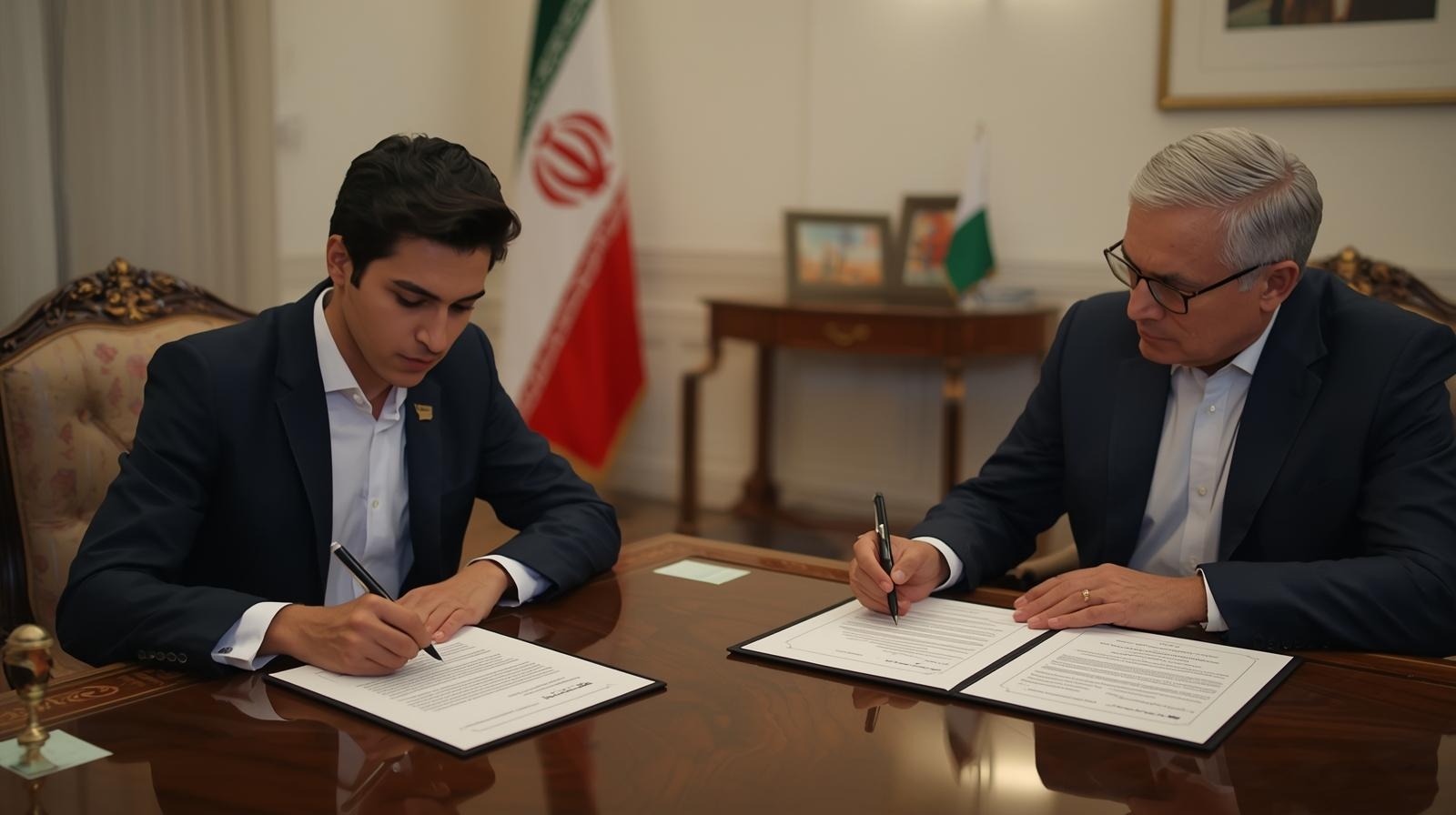
- Under Iranian law, a Power of Attorney is a contract by which one person (the principal) authorizes another (the Attorney) to perform a legal act on their behalf.
- Typically, PoA is a written, notarized document that describes the scope of authority.
- Even though a POA is, by nature, revocable, parties sometimes include clauses to make it (non-revocable) or limit revocation.
Types of POA Relevant to Inheritance
For inheritance matters, some common forms include:
- General Inheritance POA
A broad scope POA that allows the agent to pursue practically all acts necessary for the inheritance process (tax, transfer, litigation, sale, etc.) - POA for Inheritance
A narrower POA focused on just obtaining Probate Letter (heirship certificate) and related tasks. - Non-revocable / Irrevocable POA
In this type, the principal tries to waive the right to revoke or dismiss the agent. But its validity has several legal limits (e.g., it ceases upon death, insanity, etc.). - Conditional or Limited POA
The principal restricts the agent’s authority to certain assets, or conditional upon fulfillment of certain events (e.g., sale only after all heirs consent).
Whenever possible, use the narrowest POA that fully serves your needs—this limits risks.
Key Legal Requirements & Formalities
To ensure legal effectiveness, the POA for inheritance in Iran must satisfy certain criteria:
- Must be in writing and notarized/registered in a (Notary Public / Deeds Office)
- The POA should clearly specify:
- Principal’s full identity (name, national ID, birth date, address)
- Agent’s full identity
- Scope of authority (precise acts permitted)
- Duration (if any)
- Any conditions, disclaimers, or limits
- Signatures, witnesses, and official seals
- In some cases, an apostille/legalization might be needed (for a foreign-based principal) before use in Iran.
- If the POA is “non-revocable,” it should explicitly state that the principal waives the right to revoke or dismiss the agent within the boundaries allowed by law.
- The POA document may need to be accompanied by a certified translation if executed outside Iran in a foreign language.
- If the principal is abroad, the POA often must be executed before an Iranian consulate or embassy or a public notary in the country of residence, and then duly authenticated for use in Iran.
Step-by-Step Process for Granting Inheritance POA (for Heirs Abroad)
Here’s a typical procedural roadmap:
Step | What to Do | Notes & Pitfalls |
1. Select an Agent / Lawyer in Iran | Choose someone trustworthy, experienced in inheritance law, ideally in the relevant province where the property is located. | Many heirs pick a local lawyer in the same county of the inherited property. |
2. Draft the Power of Attorney | Prepare a draft that defines clear authority. You may use standard templates as a starting point. | Avoid vague language like “all affairs” unless absolutely necessary. |
3. Execution / Notarization Abroad | As principal abroad, sign before a notary / consulate, attach identification, include any required authentication (apostille or embassy legalization). | The process varies by country—check local rules. |
4. Authentication in Iran | Submit the POA in Iran (if foreign authentication was needed). Sometimes the notary public or local courts verify. | Delay here is a common cause of delays. |
5. Register & File in Court / Registry | Submit POA to relevant courts, land registry, tax office, etc., together with death certificate, heir documents, etc. | The agent may need to show the death certificate, family tree, proof of heirship. |
6. Agent Acts on Behalf of Heir | The agent may: apply for, settle taxes, attend court, negotiate among heirs, transfer property, sell or partition, defend claims. | Ensure agent sends regular reports / copies of actions to principal abroad. |
7. Termination or Revocation | If the principal wishes to revoke (if allowed), issue a revocation notice. But if POA was “non-revocable,” revocation may not be straightforward. | Even non-revocable POA ends with death, insanity, or fulfillment of the subject act. |
Legal Risks, Common Problems & How to Mitigate Them
Even with a POA, there are pitfalls. Below are key risks and how to reduce them:
1. Agent Misconduct or Abuse of Power
An unscrupulous agent might act selfishly—sell property at undervaluation, or neglect heirs.
Mitigation:
- Include reporting clauses requiring periodic accounting to you.
- Limit authority to specific acts.
- Use “conditional / limited” POA where major steps require your prior consent.
- Insert a fiduciary duty clause with possible liability.
Read more
2. Death, Insanity, or Incapacity
No matter how “non-revocable” the POA is, it terminates automatically by law if the principal or the agent dies or becomes insane.
- Questioned Validity of POA in Court
Courts sometimes reject POAs (especially non-revocable ones) if formalities weren’t followed (authentication, notarization, translation).
4. Disputes Among Heirs
Some heirs may contest the agent’s authority, especially if they were not involved in the selection.
Mitigation:
- Get consent or acknowledgment from all heirs before POA is used.
- If the POA is used in litigation, attach evidence of heir consent.
5. Overbroad Authorizations
A POA giving “all powers over all assets” may expose you to claims or liability from third parties.
Mitigation:
- Be specific in scope.
- Exclude contentious powers (e.g. mortgages, new debt) if not needed.
Special Considerations for Irrevocable / Non-revocable POA
Because many heirs fear the agent will be removed when conflicts arise, they may insist upon a non-revocability clause. But this has limits:
- Legal nature: Even so, a POA is originally (revocable) unless it’s made irrevocable through embedding in a nonrevocable contract (e.g. a sale).
- Termination by law: Death, insanity, expiration of purpose nullify it.
- Judicial control: Courts may scrutinize and set aside “non-revocable” powers if misuse or unfairness is evident.
- Scope limitation: A truly unrestricted non-revocable POA is rare and risky.
Thus, while a non-revocability clause can create stronger assurance, it should be used cautiously and always anchored to legal safeguards.
How MJK Law Firm Helps Heirs Abroad
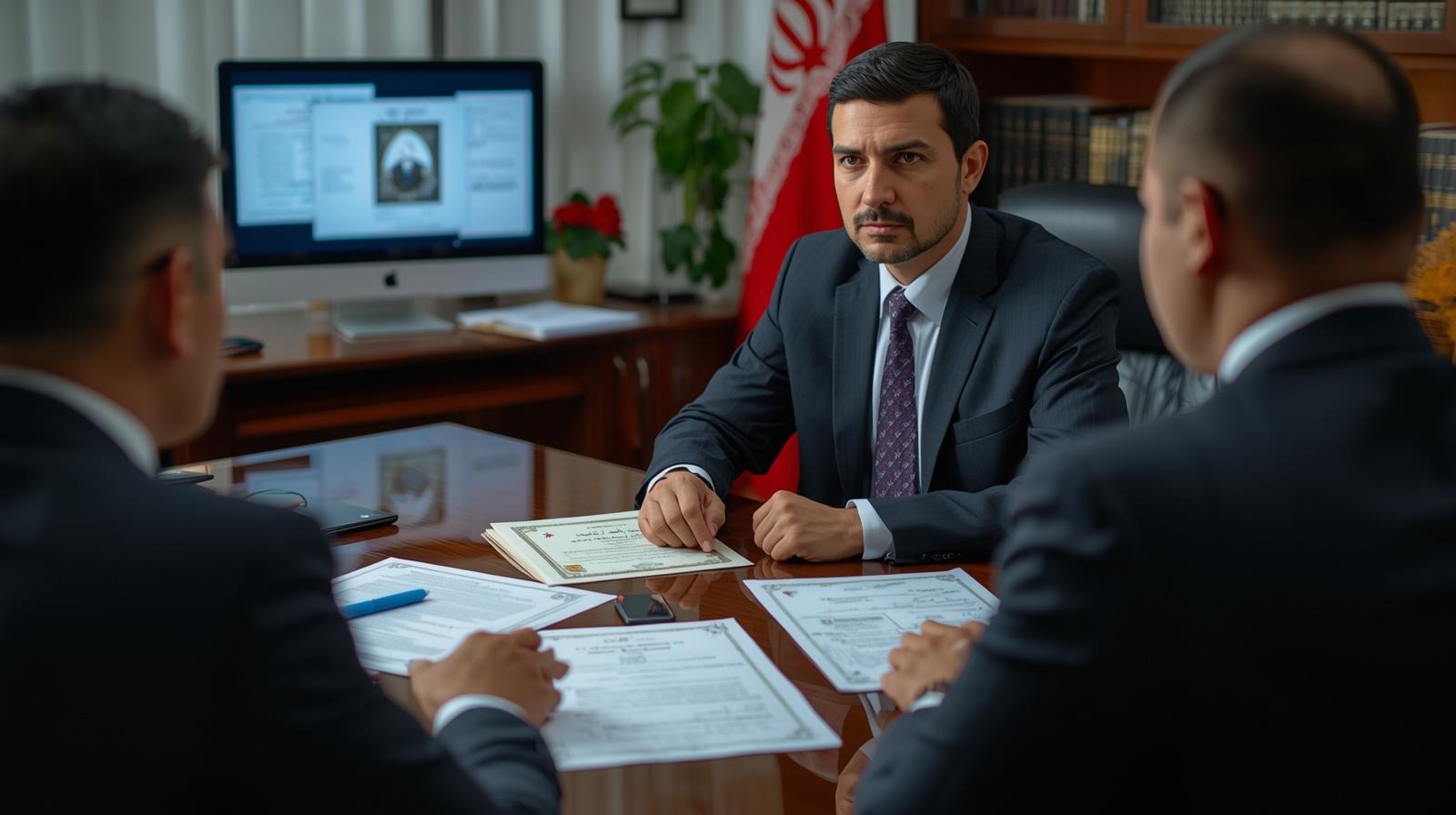
At MJK Law Firm, we specialize in helping heirs outside Iran manage their inheritance matters via trusted POAs. Here’s how we assist:
- Drafting tailored POAs suited to your jurisdiction and the relevant province in Iran
- Handling consular / embassy legalization or apostille for POAs executed abroad
- Registering and authenticating the POA in Iran
- Acting as your agent / representative: applying for حصر وراثت, negotiating divisions, litigating claims, transferring titles, selling or partitioning assets
- Securing safeguards and accountability mechanisms in the POA to protect principal interests
- Handling disputes or challenges to your agent’s authority
- Periodic reporting to the principal abroad, keeping full transparency
- Coordinating with tax, registration, and real estate bodies locally
Through a seamless remote process, we allow heirs abroad to manage inheritance smoothly, avoiding costly travel, bank problems, or procedural pitfalls.
Frequently Asked Questions (FAQ)
Q1: Can heirs living abroad use this POA without ever setting foot in Iran?
Yes. A properly executed, authenticated POA allows you to delegate fully. You don’t need to travel—once the POA is accepted by the relevant Iranian authorities, your agent handles everything.
Q2: Does a POA that is “non-revocable” guarantee permanent power?
No. Even non-revocable POAs terminate by law on the death or insanity of the principal or agent, or once the purpose is fulfilled. Courts may also challenge misuse.
Q3: Can one heir grant a POA for all heirs, or must each heir issue separately?
Usually, each heir must sign their own POA, unless all heirs grant a joint POA or authorize one representative. This avoids conflicts and challenges.
Q4: Do Iranian courts accept POAs executed and legalized abroad?
Yes, if properly executed, notarized, legalized/apostilled, and translated. But deficiencies in form can lead to rejection unless corrected.
Q5: What happens if the agent dies or becomes incapacitated?
The POA automatically terminates. At that point, the principal (or another heir) needs to execute a new POA, or act directly, or seek court intervention.
Conclusion
Granting a well-drafted, legally compliant POA is often the only practical way for heirs abroad to manage inheritance matters in Iran, from obtaining prbate letter to dividing and transferring assets. But mistakes in drafting, authentication, or oversight can lead to disputes or loss.
At MJK Law Firm, we help you through every step — drafting POA documents, authenticating them across borders, registering them in Iran, serving as your representative, and protecting your interests throughout.
If you are an heir abroad facing property or inheritance in Iran, contact a qualified inheritance lawyer in Iran today. MJK Law Firm is ready to assist you with confidence, professionalism, and full accountability.